"Overwhelmingly, the community of Bigfork is opposed to that project."
That is how Samantha Tappenbeck, the resource conservationist for the Flathead Conservation District, described the mood in the room on August 10, the day a Polson-based developer walked away from a permit application for a 97-slip marina in Bigfork Bay. The withdrawal ended, for now, one of the more public fights the Flathead Valley has seen over what you're actually allowed to build on the water. But the fight was never really about ninety-seven docks. It was about whether the water in front of a property and the dock sitting on it are the same purchase. In Bigfork, they are not, and that distinction matters just as much to someone buying a single-family lot with one existing dock as it did to a developer chasing a marina.
The Marina Nobody Approved
Cougar Ridge Development, run by developer Michael Maddy, already operates an 86-slip marina on the south end of Flathead Lake in Polson. In April, the company applied for what's called a 310 permit from the Flathead Conservation District to build a floating dock facility on the northeast shore of Bigfork Bay, right where the Swan River meets the lake and immediately west of the Flathead County public dock. The plans included the marina, a boardwalk, a swim area and a parking lot.
The district's board tabled the application in May, asking for a geotechnical report and a hydrologic study the district said it needed to evaluate the design. A July 6 deadline for that paperwork slipped, and the review moved to the board's regular August 10 meeting. About a week before that meeting, Maddy withdrew, telling the district he wanted to address community concerns through the county's broader planning process rather than the narrower 310 permit review. The board formally closed the file, which means any future version of the project starts over from scratch.
By the time the withdrawal came, a newly formed group called the Bigfork Community Alliance, organized in part by resident Ashley Atkins, had been raising concerns for months about boat traffic on the water and car traffic on Grand Drive. Retired Bozeman attorney Jim Goetz, who has owned property on the lake near Bigfork for more than three decades, wrote a public opinion piece arguing that Bigfork Bay's water is held in public trust under Montana's Stream Access Act regardless of who owns the land beneath it. The developer, for his part, said the marina would reduce congestion at public launch points like Wayfarers Park by giving boaters dedicated overnight slips instead of forcing them to trailer in and out daily.
None of that resolved the underlying question a much smaller buyer eventually has to answer too: which agency actually has jurisdiction over the water in front of a given property, and what does its permit require.
A Highway Bridge Decides Who You Call
Bigfork Bay sits at a genuinely strange hydrological seam. It's fed by the Swan River, but Flathead Lake is dam-regulated, so water backs up into the bay and behaves, in places, more like lake than river. That ambiguity isn't new. A 2004 Montana Supreme Court case, Paulson v. Flathead Conservation District, settled it by drawing a line at the Highway 35 bridge. Everything upstream and east of the bridge falls under the Natural Streambed and Land Preservation Act, meaning a 310 permit from the Flathead Conservation District. Everything downstream and west falls under Flathead County's Lakeshore Protection Act, meaning a Lakeshore Construction Permit from Flathead County Planning and Zoning instead.
That single ruling is why the marina application went to the conservation district rather than the county planning office, even though most people would look at Bigfork Bay and simply call it lake. It's also why, according to Tappenbeck, county staff field calls constantly from property owners who assumed they knew which office to contact and didn't. If a professional agency finds this genuinely confusing on a regular basis, a buyer relocating from out of state has essentially no chance of guessing correctly without asking.
What This Means If You Just Want One Dock
Most buyers looking at Bigfork waterfront are not proposing a marina. They want one dock for one boat. The friction there is smaller than the marina fight but no less real, and it lives in Flathead County's Lake and Lakeshore Protection Regulations.
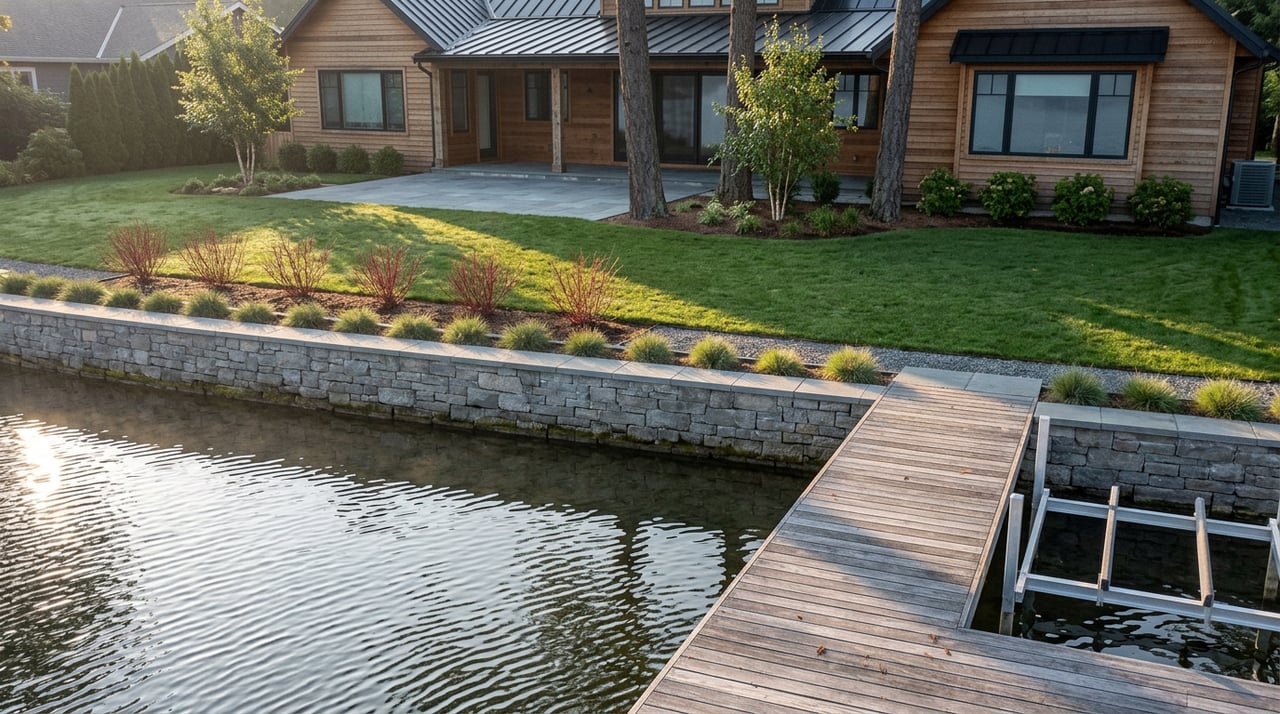
The county allows only one dock per waterfront property, with a narrow exception for separately platted lots that each have independent water and sewage service. Dock decks are capped at eight feet wide. Any work inside the lakeshore protection zone, the 20 horizontal feet measured from the lake's mean annual high water elevation, requires a permit, and that includes some vegetation removal, not just construction. The base filing fee for a single residential dock and gangway is $305, with $125 tacked on for each additional activity bundled into the same application, a boat lift, a retaining wall, a new water line. Building first and applying for forgiveness afterward doubles that fee, and doing it a second time quadruples it. If the dock you're eyeing was moved from another lake, county rules require it be inspected and disinfected before installation, specifically to keep invasive species from hitching a ride between waterbodies.
None of this is exotic by lake-market standards. What makes it worth a buyer's attention in the Flathead Valley right now is how visibly contested the enforcement side has become.
The Pattern Isn't Just Bigfork
Ninety miles of shoreline south, in Lakeside, a similar story was playing out on almost the same calendar. Flathead Lake Land Partners LLC, part of Discovery Land Company (the firm behind private club developments in Whitefish, Big Sky and Shields Valley), had been building the Flathead Lake Club. In February 2026, county commissioners approved a variance letting the club's marina dock extend to 159 feet, 59 feet past the county's standard 100-foot limit. Citizens for a Better Flathead, a local watchdog nonprofit, sued, arguing the county skipped required public process and environmental review, and specifically raised concerns about construction near Stoner Creek, bull trout habitat, during unusually high lake levels. A judge denied an immediate restraining order but set a preliminary injunction hearing for March.
Two of the valley's highest-profile dock disputes in the same year both turned on procedure and permitting, not simply on whether people wanted boats near their homes. That's the pattern a Bigfork buyer should actually take from the marina story: not that development is unwelcome here, but that the paperwork trail behind any dock, existing or proposed, gets scrutinized more closely than it used to, and a permit that looked settled two years ago may not be as settled as it appears today.
There's also a longer horizon worth knowing about even if it changes nothing this year. PacifiCorp, which owns the Bigfork Hydroelectric Project a mile upstream from the bay, has said it's exploring a sale of that dam, with decommissioning a possibility down the road if no buyer steps forward. Tappenbeck was clear that the conservation district can't weigh a hypothetical dam removal into today's permit decisions since no formal plan exists yet. But anyone buying on Bigfork Bay with a decade-long view should register that the lake levels current regulations assume are tied to infrastructure whose ownership is, for the first time in a long while, an open question.
Before You Close, Get the Paper, Not Just the Photo
A dock that looks solid in listing photos tells you nothing about whether its permit is current, transferable, or even complete. Before making an offer on Bigfork waterfront with an existing dock, it's worth asking the seller or your agent for:
- The specific permit type tied to the dock, a 310 permit or a Lakeshore Construction Permit, and which agency issued it.
- The original application and any as-built sign-off, not just a snapshot of the structure.
- Confirmation the permit hasn't lapsed. County lake and lakeshore permits generally expire after a year if the approved work wasn't completed on schedule.
- Whether the dock has been rebuilt or substantially altered since it was first permitted. Reconstruction beyond half the original structure triggers a brand new filing under county rules.
- If the dock or shore station was relocated from another lake, documentation that it was inspected and disinfected for invasive species before installation here.
None of this should scare a buyer away from Bigfork Bay. It should just replace an assumption with a question. The bay itself isn't going anywhere. Whether a specific dock's paperwork is as solid as its pilings is something you can actually find out before you sign.
If you're weighing a waterfront property in Bigfork and want a straight read on what's attached to it, permit history included, the Cecil Waatti Team at MTN Investments works this stretch of Flathead Lake regularly and can help you ask the right office the right question before you're past the point of asking. Work With Us.
Frequently Asked Questions
What's the difference between a 310 permit and a Lakeshore Construction Permit? A 310 permit comes from the Flathead Conservation District and covers work on rivers and streams, including the Swan River side of Bigfork Bay. A Lakeshore Construction Permit comes from Flathead County Planning and Zoning and covers Flathead Lake itself. Which one applies to a given Bigfork Bay property depends on its position relative to the Highway 35 bridge, the dividing line set by the 2004 Paulson case.
Does an existing dock's permit transfer automatically when the property sells? Not necessarily, and it shouldn't be assumed. County lake and lakeshore permits are tied to specific approved work and can expire, commonly after a year if construction wasn't completed on the original timeline. Get the actual permit file, not just a verbal assurance that "it's permitted."
Can I install a secondhand dock I bought from another property? You can, but county rules require the used structure be inspected and disinfected before it goes in the water, to prevent transferring invasive species between lakes. Factor that step, and its cost, into any plan to reuse a dock rather than build new.
Is the Bigfork Bay Marina project dead? Not permanently. The developer withdrew the application and the file was formally closed, but he has signaled plans to resubmit after addressing engineering requirements and public concerns. Anyone buying near the proposed site should expect this conversation to resurface.